Sunday, December 22, 2013

Magic of Mauritius


MAURITIUS has enjoyed a colourful history since this beautiful volcanic island of turquoise lagoons and 200 miles of white sand beaches rose out of the Indian Ocean 70 million years ago, and now it is forging a rich and exciting future.

Once best known for its most famous inhabitant, the dodo bird, the friendly Mauritians are now concentrating on birdies of another kind. While the first Dutch settlers hunted the dodo into extinction, Mauritius’s new industry is very much alive and growing.

More than a thousand miles off the south-eastern coat of Africa, the islanders rely on textiles, sugar cane and tourism for their income and now there are plans to build on its appeal to visitors by establishing itself as a true destination for golf.

Over the last five years the number of tourists visiting the island has risen annually to three-quarters of a million with almost 100,000 arriving from the UK. For many it is a welcome return to an exotic island where the climate is close to perfect all-year round with temperatures rarely dipping below 70OF and rising to the high 90s in summer.

The coastline is almost entirely ringed by barriers of coral reefs – which locals claim are protection from the disasters that have befallen other islands in the Indian Ocean recently. And turquoise, crystal clear lagoons, which are perfect for swimming and water sports, are home to multi-coloured fish, moray eels and magnificent coral beds.

Add to that a friendly welcome from a population of more than a million Hindus, Creole, Chinese, Muslims and Europeans, who live in splendid harmony and speak Creole, French and English equally proficiently.

If you are a football fan, you will be treated like an old friend. Premiership matches are shown live on satellite television and almost everyone supports an English team. There was even one house painted in the red and white stripes of Sunderland complete with club badge.

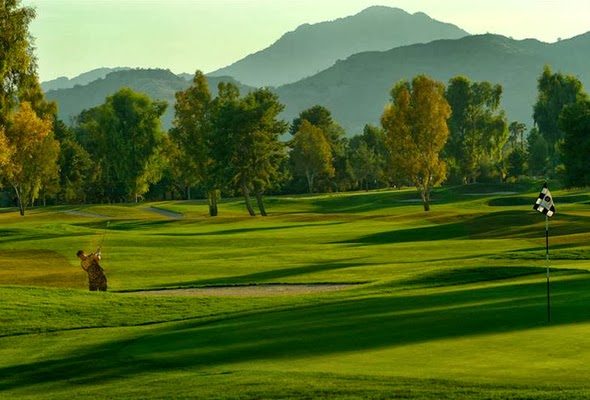
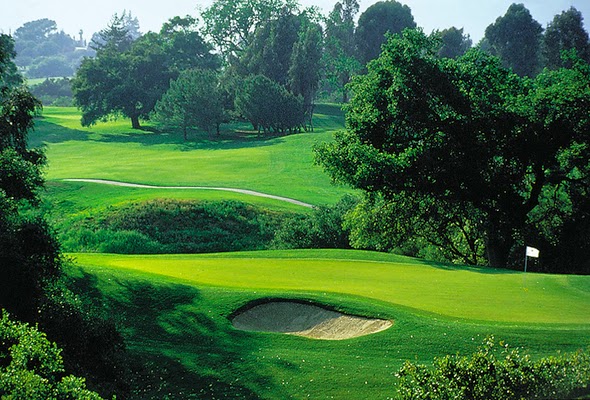
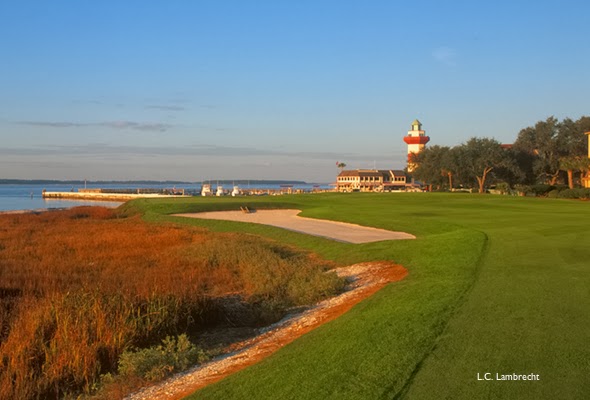
Mauritius has always been a destination for the cognoscenti and now its reputation as a golf destination is growing. The island already has a collection of outstanding and stunning 18-hole golf courses. The Belle Mare Plage Resort, regarded by some as the premier golf resort on the island, has two challenging courses - The Legend and The Links. Le Touessrok’s spectacular course, built by Bernhard Langer on its own island a couple of years ago, is the ultimate test from the back tees.

The Paradis Hotel & Golf Club’s course in the shadow of the Le Morne mountain hosted the first Mauritius Open in 1993; the Golf du Château course at the Le Telfair Resort is a beauty and the most recent, Ernie Els’ creation at the Four Seasons Anahita resort.

There’s also the private Gymkhana club in Vacoas and five good nine-hole courses at Trou aux-Biches, Shandrani (Blue Bay), St Géran (Poste de Flacq), Maritim (Balaclava) and the Sofitel Impérial (Wolmar).

A significant move in this development as a major golf desination was the relaxation of laws allowing foreigners to own properties on the island for the first time.

As a result, the Tamarina project included 30 lodges and 119 luxury villas around a new course; and Anahitawill included more than 200 villas.

As David Marsh, golf manager of the Le Touessrok course, said: “Mauritius was perhaps not seen as a golf destination in the past but all that is changing now."

THE KNOWLEDGE

● Mauritius has two seasons: warm and rainy from September to April and pleasantly cool and dry from May to November. Daily high temperatures range from 22OC (72OF) in winter to 31OC (88OF) in summer. Water temperatures vary between 22OC (72OF) and 27OC (81OF).

●The island is approximately 28 miles wide by 40 miles long.

● No vaccinations are required.

● A tourist police service has been set up to ensure security in tourist zones.

● Mauritius is four hours ahead of GMT.

● A visitor must be in possession of a valid passport and a return or onward ticket.

● 12-hour flight from London Heathrow.

Blooming Bermuda


TAKE a beautiful island ringed by pink sand beaches and warm turquoise waters teeming with wahoo, tuna, rockfish and red snapper. Everywhere is ablaze with the rich pinks, purples, reds, yellows and blues of frangipani, jacaranda, bougainvillaea, hibiscus, oleander and morning glory – and you have paradise.

Add eight glorious golf courses – more per square mile than anywhere in the world – and you have perfection.

In Bermuda they know their onions when it comes to golf. Like everything else on this beautiful volcanic island lying in splendid isolation in the Atlantic Ocean, a two-hour flight from the United States’ eastern seaboard, their courses are not only a superb test of golfing skills but expertly manicured and maintained.

Although a British colony, many Britons know more about Bermuda shorts and the Bermuda Triangle than Bermudan golf. With only around 10 per cent of the almost half a million tourists each year coming from the UK, it had not been regarded as the Brits’ first choice for golf.

One of Bermuda Tourism's marketing campaigns was – ‘shop in New York, flop in Bermuda’. In recent years, the number of visitors to the island has fallen and Dr Ewart Brown, the Minister for Tourism, admitted that some of the fault lay with Bermuda.

“In the eighties, we became less dependent on tourism and more on international business," he said. “We sort of got fat and complacent."

But now there is an upturn in visitors and there are exciting plans to market the island. With the variety of courses, and the relatively uncrowded links, Bermuda makes an ideal golfing destination.

Nick Faldo, arguably Britain’s greatest ever golfer, is one who presumably subscribes to this opinion having a home on the island and being a member of the fabulous Tucker’s Point Club.

Surveys have shown that tourists point to the hospitality of the locals, known as onions, and the safety as the major attractions of an island which is a pristine and orderly destination unlike some other ‘paradise’ locations.

A hub for offshore banking and re-insurance, it is a wealthy island, and it has attracted the likes of Michael Bloomberg, the Mayor of New York, and Ross Perot, billionaire and once US presidential candidate, who have houses here.

Bermuda has its own celebrities – film star Michael Douglas for example, who is perhaps Bermuda’s most famous resident along with his wife, Catherine Zeta Jones. Michael’s mother is Bermudan and the family are major shareholders in the Aerial Sands, an upmarket resort on the South Shore.

The superstar couple share a passion for golf and are members at Riddell’s Bay Golf & Country Club – the oldest 18-hole course on the island – and Tucker's Point Club, in an area known as Bermuda’s Beverly Hills, which is a disservice to the Bermudan version so undeniably more beautiful and classier.

Locals tell you that on the island there is a church every 400 yards and a bar every 500 yards. The local specials are well worth sampling. There’s Dark 'n Stormy, black rum and ginger beer, a refreshing drink but have too many I was warned and "it will knock you on your butt". And Rum Swizzle, a concoction of five varieties of rum, fruit base, grenadine and some secret ingredients which are left to ferment.

They could have added that there’s almost a golf course every 800 yards on the island which stretches for 22 miles from east to west.

“Golf is critically important to us," said Dr Brown, a steady 18 handicapper. “We want to market Bermuda as a golf destination. Although the golf season is from November to April, we are open 365 days a year. We have a great variety of courses and it's convenient to get to them as we are a small island. In December, January and February, when you're freezing, we are open for golf."

In the past many famous names have played golf here – Churchill, Eisenhower, Kennedy, Nixon, Carter and Bush senior, and Bob Hope.

Frankie Rabain, the professional at Port Royal for 27 years, said: “There is great hospitality here. We have lovely beaches, a good climate, lots of history and our golf courses are as good as anywhere in the world, and they are all conveniently close together."

Port Royal, which was named one of the top public courses in the world in a prestigious poll, is one of three courses – the others are Ocean View and St George’s – owned by the government. There are no restrictions to playing there, although guests at the many resorts and hotels have an introduction to any of the courses.

Every visitor is catered for in luxurious accommodation including The Fairmont Southampton, the elegant Elbow Beach, which is owned by a Saudi prince, and Aerial Sands, and the friendly Harmony Club is ideally placed in the middle of the island.

Although there is a defined local golf season, you can play any time of the year, claimed Alex Madeiros, the head professional at Riddell’s Bay.

“January and February are good months," he said. “The best period is probably September to December. The locals find July and August too hot to play golf."

Bermuda’s sub-tropical temperature is ideal, rarely dropping below the mid-sixties and rising to the high eighties. In the autumn the waters of the Gulf Stream are still in the low eighties and in the summer going into the sea is akin to taking a hot bath. Water sports, including snorkelling and scuba diving, are favourites on the island and although many of the resorts have private beaches two of the most spectacular, Warwick Long Bay and Horseshoe Bay, are open to the public.

The Bermudians enjoy eating out and there are many restaurants not just in the capital of Hamilton but also on the waterfront like Elbow Beach’s Mickey’s. Seafood dominates many menus and dishes like boiled salt codfish, broiled spiny Bermuda lobster, curried mussel pie, spicy fish chowder spiked with sherry pepper sauce and black rum, shark hash and conch stew, tuna, wahoo, red snapper and rock fish are not to be missed.

When you’re not golfing, swimming, eating or drinking, there’s plenty to take up your time. History is everywhere on the island, which was first discovered by Juan de Bermudez more than 500 years ago. Then in 1609, the British ship, Sea Venture, captained by Admiral Sir George Somers, was wrecked on the dangerous reefs, which have claimed scores of victims over the centuries. They set up home on the island and in 1615 England bought Bermuda for £2,000.

Now St George’s, where they first settled on the eastern coast of the island, is Bermuda’s second town and where many of the cruise liners dock when they visit. The history of St George’s is fascinating with quaint brightly-painted buildings, with white limestone roofs designed to catch the much-needed rainwater, tucked away in narrow lanes and back streets.

Everyone is catered for here with those who regard shopping as much a sport as golf more than satisfied in ultra-smart Hamilton where designer shops and all the big brands are just a credit card apart.

When your day is done just kick back, relax with a drink, listen to the whistling chorus of the tiny tree frogs, and watch the spectacular sunset. One thing’s for sure it’s not likely to be Dark n’ Stormy.

GOLF IN BERMUDA

Belmont Hills Golf & Country Club
Bermuda’s newest professionally designed 18-hole course.
Par-70, 6,017 yards.
Contact 001 441 236 6400 or visit www.belmonthills.com

 
Design by Wordpress Theme | Bloggerized by Free Blogger Templates | coupon codes